Showing posts with label laptop. Show all posts

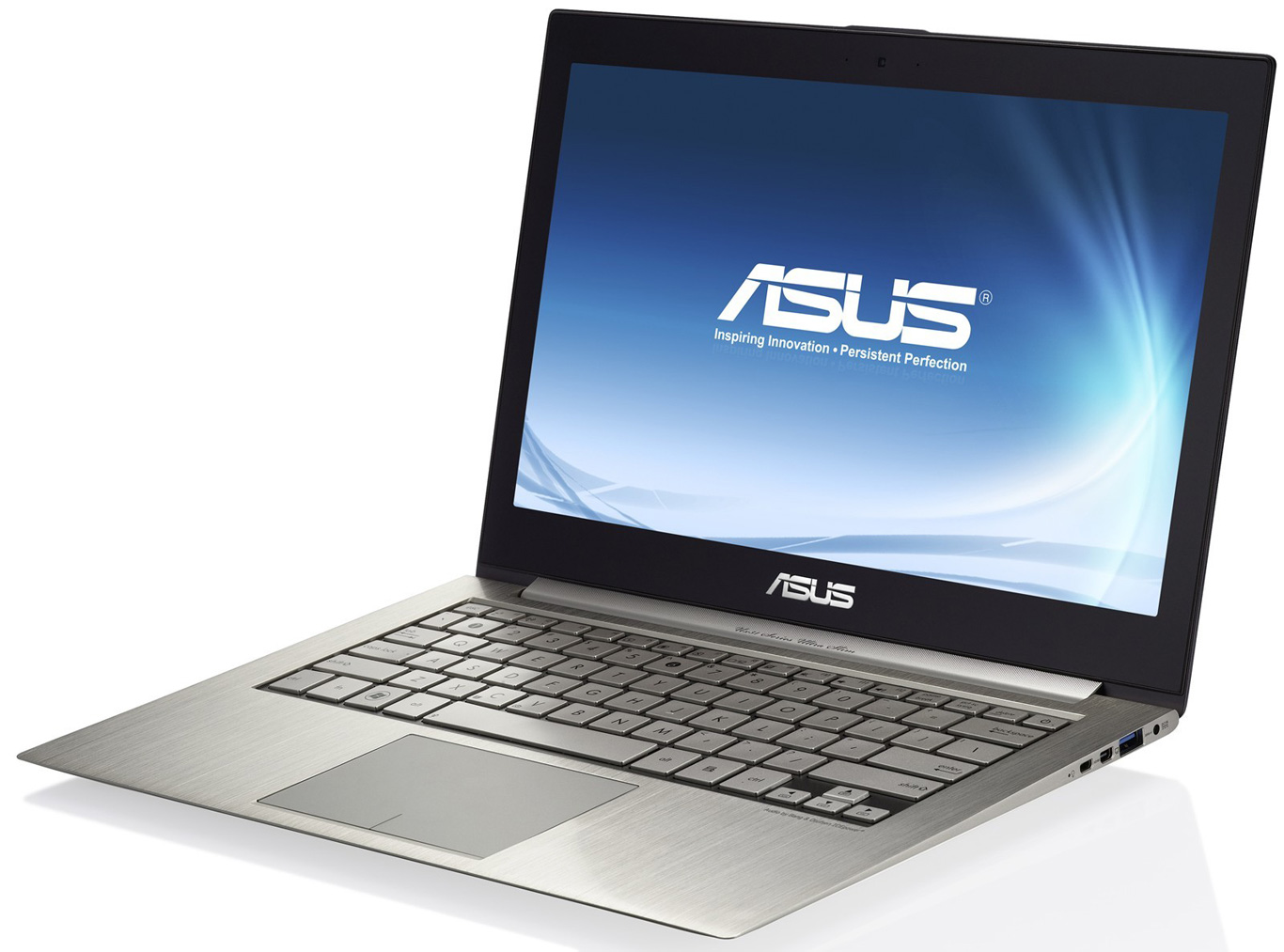
Asus Zenbook UX31

 Want a laptop that's a wafer-thin square of aluminium with more power and storage than a MacBook Air, but for £400 less? That's the promise of the Zenbook, one of the first notebooks to meet lntel's full Ultra book spec.

From a distance, it could easily be mistaken for an Air, but the Zenbook is shinier, more industrial and not as smartly dressed, with a mismatched lid and body. That said, the build quality is spectacular. It's cold to the touch, at least at first - beryllium alloy heatpipes under the skin turn the case into a giant heatsink for the CPU. This means it warms up around most of its surface area when in use, without developing a hot spot when you use it on your lap for a while.

The Zen book uses Intel's HD graphics for 30 rendering, which means it's tuned for high-speed video editing at HD resolutions and can run new games, albeit at very low graphics settings. It's just a shame that the high-resolution screen is pale and lacking in contrast. Asus' flattery of the MacBook Air continues in the pricing- there's also an 11in model for E850 – but this Core i7 model offers exceptional performance and value.




Samsung Series 9


 The uniquely sculpted body of Samsung's Series 9 isn't just elegant, it's the thinnest.
The difference between this and the Vaio is fractions of a millimetre, though, so it had better have something else to distinguish itself. The good news is that it does.

The screen, for starters, is so bright it can be used in direct sunlight, and there's a good six hours of charge in the battery, which puts it a close  second to the Sony in terms of how long you can use it for.
The 900X3A was launched a little while ago, though, and newer rivals such as the Asus Zenbook have since emerged with better and faster processors for the same price. If all you do is surf the web and read spreadsheets, you may never notice the difference. But compare its performance in anything more processor- intensive, such as video encoding or gaming, and it will become apparent. Not that the Samsung isn't up to these tasks - it's just that the others will outperform it.

While this is a nice- looking machine, it feels flimsy next to the Zenbook and Air. There's a bit of give in the plastic keyboard, which serves as a reminder that it is possible to go further than is healthy with those weight -loss programs.


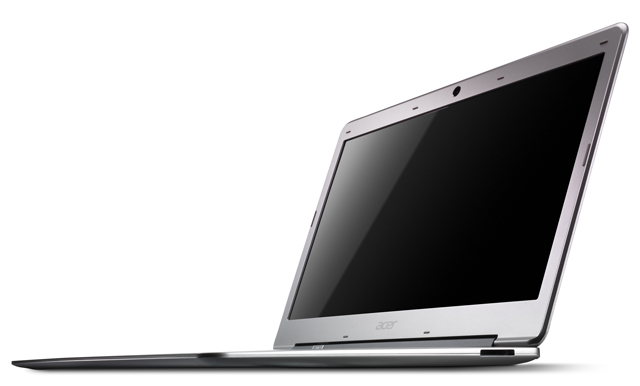
Acer Aspire S3


With a bladelike body, bright screen and a Core i7 processor, the Aspire S3 has almost everything you'd want in an Ultrabook. But its big selling point is its price. On the face of it, you get pretty much what you get with the Sony, plus just over a thousand pounds. For the Ultrabook to become the computer of the next decade, there will need to be more laptops like this.

That doesn’t quite tell the whole story, though, because the S3 isn't without drawbacks. Its body is plasticky, and while it may not look cheap, neither does it have the super-sleek design kudos of the Zenbook or Air. Similarly, the screen is decent enough but lacks the pixel density and exceptional colour performance of its peers. 

Compared to almost any other Windows notebook, the S3 would be an out and out winner. But the standard of competition for Ultrabooks is outrageously high already, and things are only going to get better. However, Acer may have one more card to play: right now, the extra £90 for an equivalent Zenbook is well worth paying, but the S3 has fallen in price by £100 in less than two months since launch. If it continues to drop like that it will become a far more convincing proposition.


Sony Vaio Z


Thin and light often means slow and shoddy when it comes to 3D processing, but the Valo Z confounds that expectation.

It doesn't meet the full set of specs lntel requires to use the Ultrabook branding, but it has something none of its rivals do: a plug- in graphics card that gives it the power of a desktop PC when docked. The dock uses a proprietary connector that combines both the Thunderbolt technology used in Apple's MacBooks and a USB3.0- compatible port. Hook it up and it takes the role of charger, Blu-ray player and graphics card. The AMD HD6550M inside the dock won't run Battlefield 3 in super HO, but it's exponentially better than the lntel HD3000 graphics that feature in the laptop itself (and every other machine tested here), making the Vaio a viable desktop replacer.

The rest of the Vaio is less exciting, however. The carbon fibre body may make it lighter than the metal Zenbook, but it feels flimsy and unstable with it. That might not matter if it weren't so expensive, but you can buy a MacBook Air and a proper gaming desktop PC for less. Which means that, impressive as it is, the Vaio remains off - limits to people with only one house.


Lenovo ThinkPad X130e


This week we saw the release of the Lenovo ThinkPad X130e that has beendesign as an notebook for students. It has an 11.6 –inch display, an overallweight of 4 pounds, and a runtime of maximum 8,5 hours making it one of thebest batteries you can find on a laptop.

Buyers will have several models to choose from like AMD or Intel processors.Beside this all models will include a rubber bumper on the top, reinforced andrecessed ports and strong rounded corners, meaning that the laptop will be fineeven in tough conditions.

On a hardware level, beside the option between and AMD and Intel processors,buyers can benefit from an up to 8GB of RAM, 500 or 320 GB hard-drive and avariety of ports so there will be no devices that you can’t use (for example 3USB2.0, an Ethernet port, flash card reader, HDMI port etc.). Also the ThinkPadX130e includes a low light sensitivity webcam, so your friends can see you evenin the dark.

At a 469$ (on the Lenovo site) you can say that it’s an extremely cheap laptopfor what it offers. And you are right. This is due to the fact that it’s anotebook destined to students who may not have the money to buy an expensivelaptop and we all know that Lenovo is one of the best. So either is a red oneor a black one this should really be a top choice for any student and not only.


Apple MacBook Air


The latestmost expected product from Apple, the Apple MacBook Air has arrived markinganother step forward in Apple’s day-by-day rising utopia in the computer world.

Part of theMacBook Air trademark is its’ solid-state design, which means no moving parts suchas an optical drive or a hard disk, thus resulting the flat profile that thelaptop has. This is not a very good news though because of two importantreasons: first, the mass storage chip form that costs a great deal more thanthe conventional hard disk and, second, because most of us are not ready to throwaway our CDs and DVDs quite yet. So due to the lack of an optical drive youjust have to do the best with the 2 USB 2.0 ports, a card reader and an audiosocket. You may need to appeal to your desktop system or maybe the biggerbrother of the MacBook Air, the MacBook Pro, if you want to play a game or usePhotoshop for example.

Inconclusion, the Air, is a very good computer if Facebook is your thing, or justusing it for office work, or just listen to music and play a movie. The Lion OShas a pretty good design and works good too. But if you like doing more thanthat you might want to try the MacBook Pro for example. At a starting price of1000$ you can say it’s a bit expensive thinking at want you can do with it, butnever the less it’s a remarkable example of what the future of “laptoping”looks like.


iCloud


The iCloud is the highly waited and much rumoured wireless data sync service for iOS devices, Macs and PCs. It replaces the MobileMe service, which can not be classified as best from Apple, being much more low-cost( more exactly free). So what does the iCloud do? Well it synchronizes all your contacts, calendars and mail across your devices. If, for example, you create  a new contact on your iPhone, its automatically sent to the iCloud from where its synchronized with all your devices. This is not all, the “cloud “ can also store documents, bookmarks and books. Cool ain’t? Stay tuned on our site for more iCloud news this days.


Samsung Series 5


This is a laptop that lives in the cloud. It’s the very first computer that you can buy and which runs Google’s Chrome OS sports on 12.1inch screen(31cm). It has a 8.5-hours battery, 20mm profile and a 1.66 GHz dual-core Atom processor. The 16GB SSD may seem little but given that its OS is a browser, its apps are cloud-based and you can store what you want on the web, this should not be a problem.


Twitter Delicious Facebook Digg Favorites More